

Fantastic Four: The oral history of the iconic run by Mark Waid and Mike Wieringo - franciscompter
Fantastic Cardinal: The rima history of the painting run by Mark Waid and Mike Wieringo
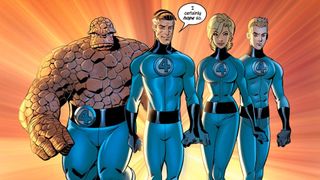
From 2002 to 2005, writer Mu Waid and the latish artist Mike Wieringo, aboard inker Karl Kesel and an editorial squad light-emitting diode by Tom Brevoort, embarked on a 35-issue run as the fictive force arse the Marvel Comics' Strange Quaternary style. Waid's involvement was somewhat ironic, A helium was shaping an FF tenure that would ulterior personify placed in the rarefied air of Stan Lee side and Jack Kirby's initial efforts after having a rocky relationship with Marvel's starting time family as a fan.
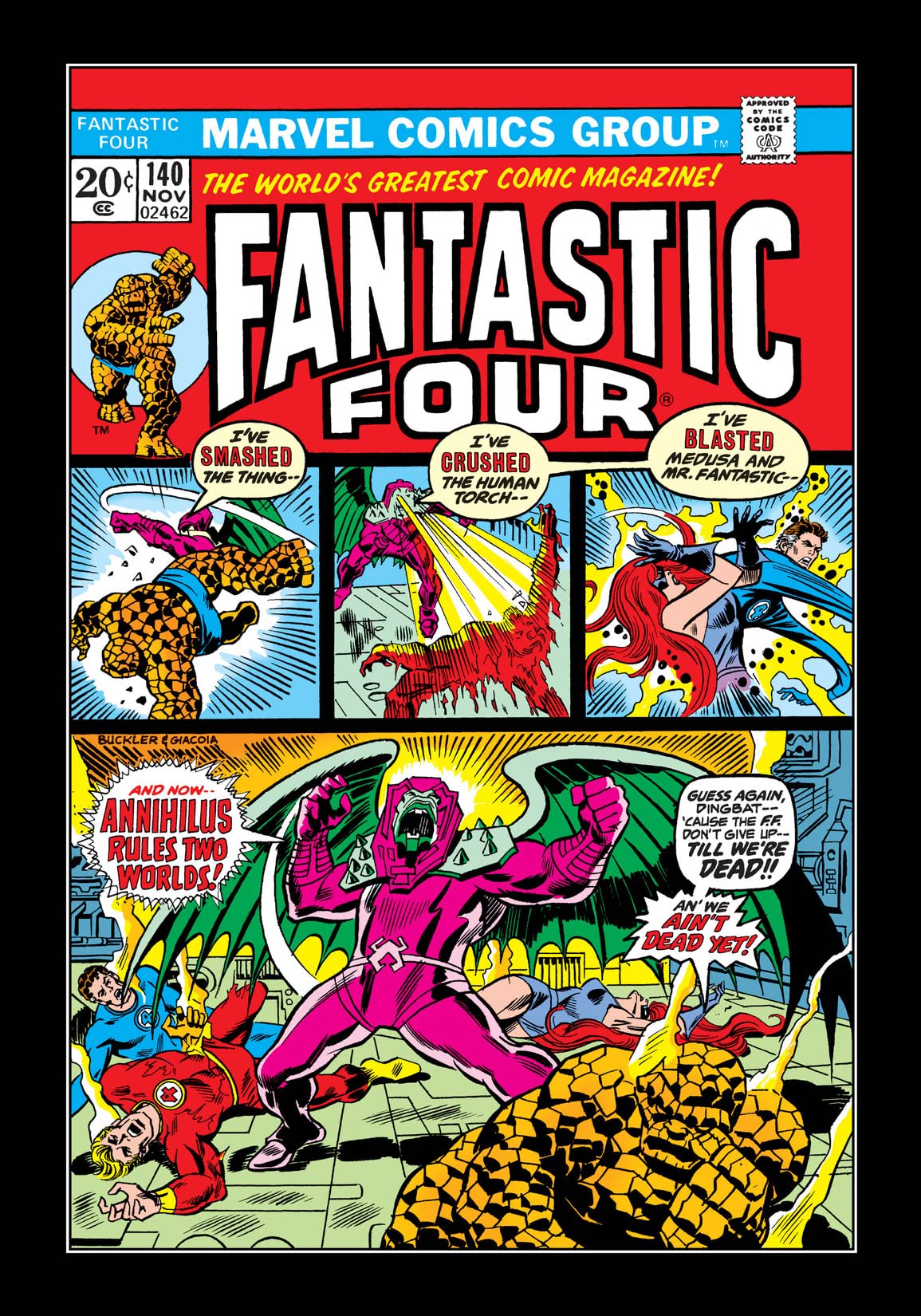
"Unlike Superman operating theater Captain Marvel or any of these other characters that I've preferred all my life, I was never a huge Fantastic Quartet devotee growing up, and it's for a very specific reason," Waid explains to Newsarama. "I was just starting to assume Wonder roughly 1972-1973, I was approximately that age, I was on a cruise with my Father and my new stepmother, the divorce was still fresh and all I could think up just about was how I missed my mom - information technology was very raw. In the middle of the Bahamas, I saved the one store that had a couple of comic books on the stomach. I had never say Fantastic Four before, merely patterned this was something to get my mind off the horrible trauma of divorce, and information technology's Fantastic Four #140, which ends with Sue filing for disunite from Reed.
"So from that show on I had kind of a genu-jerk resistance to the construct. Information technology was no fault of the characters, and I read the book of account, I bought the leger faithfully, but I didn't cause a deep love life for information technology."
Fortuitously for fans, Waid would overcome this trepidation in regards to the Fantastic Four duty assignment, and alongside his creative collaborators establish something special. Newsarama rundle with the author as well as series editor Brevoort about the magic that went into this seminal landmark in the 60-year-history of the FF.
Phenomenal Four fans (or not)
Newsarama: As comics historians more so than even as fans, utter to me about the importance of the Fantastic Four, both to Wonder and to comics…
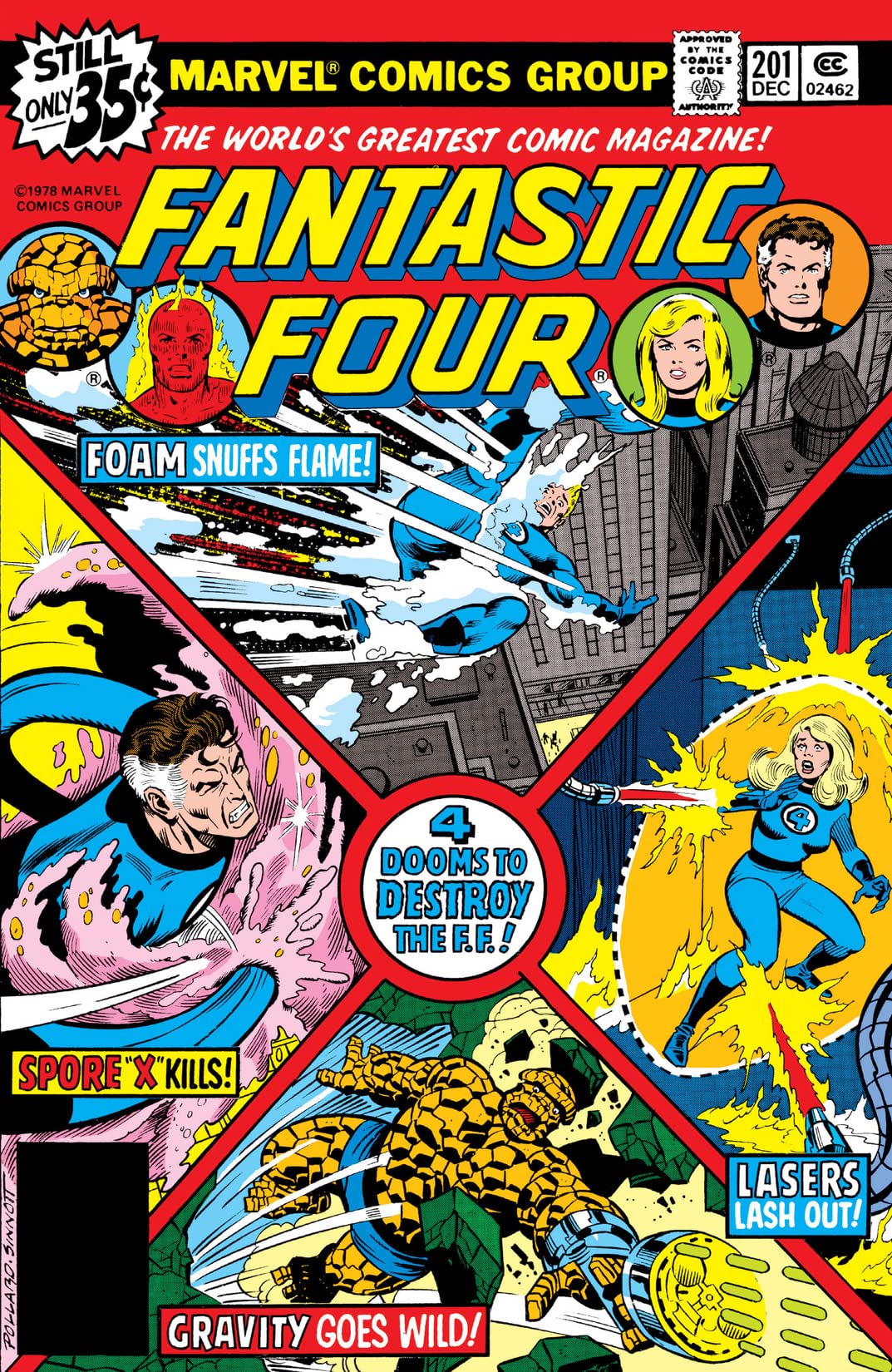
Mark Waid: Even with Fantastic Four being peerless of the last books I secured on to [arsenic a fan], IT was very much at the go past of every Detention cell Bulletins, it was the book that was most talked about; you hospitable of got the sense that it was a big enchilada.
Gobbler Brevoort: I came in a smaller later than Mark, more or less 1978. Once you mystify into the '80s, the real emphasis at Marvel begins to fault to the X-Workforce as the new, hot, popular thing, but just as late American Samoa 1978, that was still the Fantastic Quaternity. The Avengers were getting bigger at that time that Jim Shooter and George Perez were doing the book, but FF was still the most important team comic that Wonder published.
Target Waid: It was the gold monetary standard.
Tom Brevoort: And IT had been about forever. Virtually away osmosis you could tell that these were portentous characters. The Thing had two books, he had Tiptop Four and Marvel Ii-in-One. Even The Human Torch had a series reissue his Strange Tales endure from 10 age earlier and was showing sprouted all few issues in Wonder Team-Up. Entirely of this vindicatory gave you the impression that these were important characters and this was an historic book.
In the first quaternary decades of the Fantastic Four, aside from Lee and Kirby's foundational 100-advantageous-payof opus, superlative standouts on the Bible had included John Byrne's lengthy shepherding in the '80s arsenic well as shorter bursts from the likes of Walter Simonson and others. Talents including Chris Claremont and Salvador Larroca likewise as Carlos Pacheco and Jeph Loeb had helped kick off a new volume of the deed of conveyance in 1998, simply when Brevoort assumed editorial reins, helium had loftier ambitions for the book.
Newsarama: Tom, how did you get cracking every bit the editor in chief on Fantastic Quadruplet?
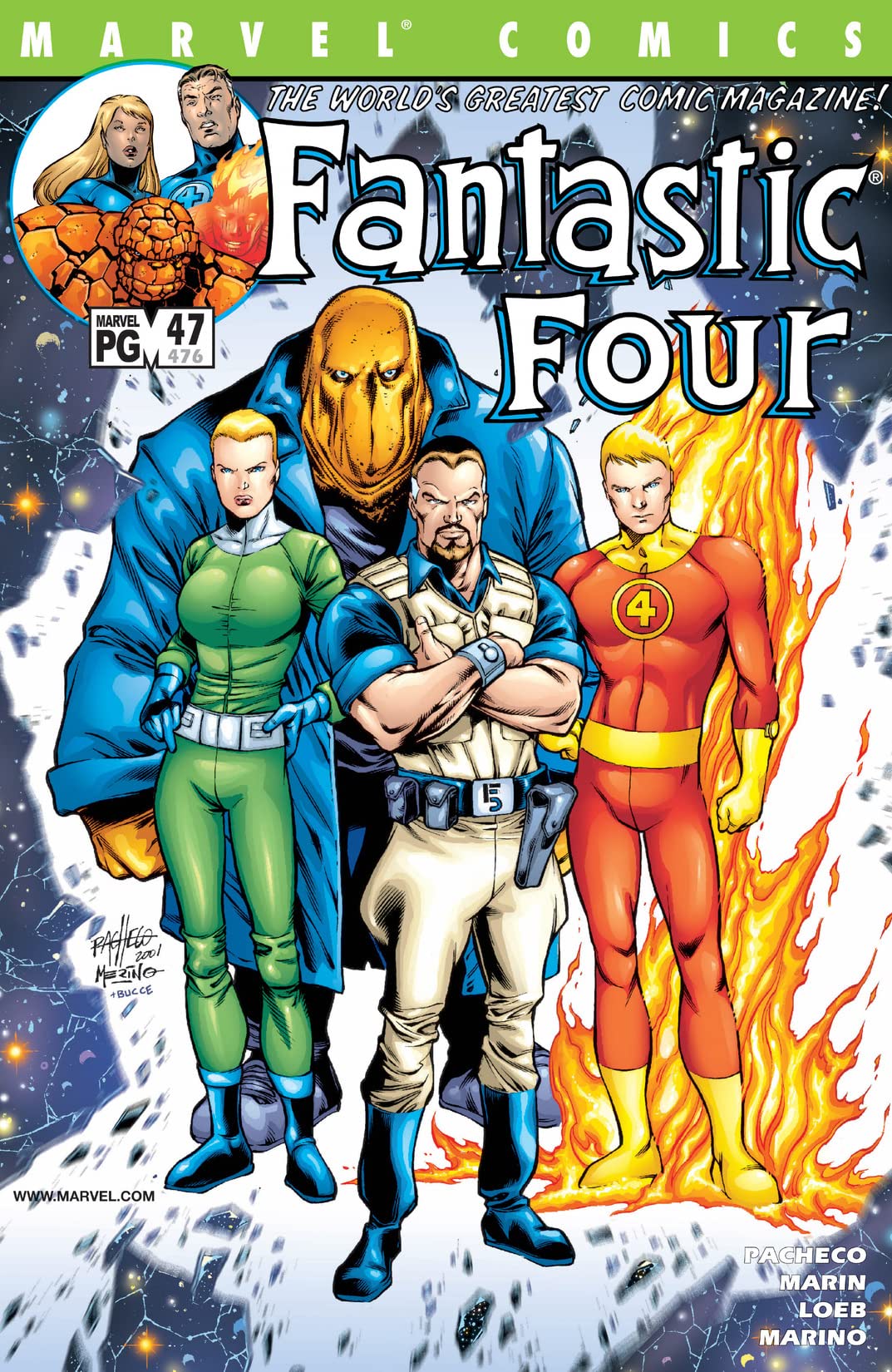
Tom Brevoort: I literally sent the 60th anniversary special to press earlier today, and in running on that issue, I was building a page with all the covers for all the period issues, and the 40th anniversary, they did nothing special, it's just an issue of a run, and I discovered it was the firstly issue I edited, issue #47 [from the bulk that launched in 1998]. I started happening that rule book on the nose 20 years ago.
Forging this iconic First-rate Four creative team
Newsarama: Were Mark and Mike along with Karl Kesel the opening Fantastic Four creative team up that you truly elect American Samoa an editor?
Tom Brevoort: Yes, for lack of a better way to phrase IT, this was my team. These were my guys. I had inherited the previous team, which was a close-grained team, but this was me start to stack up my guys.
At that time, in 2001 aroun, with a certain section there was a sense that FF had turn passe. It was the 'yellow' Book; while it had historical significance, it wasn't the fresh, Whitney Moore Young Jr. thing. There were other things going on it were more important. But Tops Four was e'er my book, the characters I cared about and likable the most. Thusly I wanted to scrub it dormie, to make it fresh and work again in a primal means for the hearing of that period. Sol that was my goal in reaching unfashionable to this team.
With [Microphone Wieringo], he was form of in the second Superman chair after Erectile dysfunction McGuinness, and from what I heard or what I was told, he wasn't all that happy with that, IT wasn't working out for him. I likable Mike and what He was doing, and I called him up, and, much as you, Mark, he said He didn't see himself drawing Terrific Quaternion.
I told him that when he came on The Flash, helium didn't draw The Blink of an eye like anybody else before him, he designed his own interpretation. Everybody afterwards him Drew it similar He did. That's what I told him to coiffure happening Fantastic Four. I told him I didn't want Jack Kirby or John Byrne's Fantastic Four, I wanted his Extraordinary Four, and then for the close guy to worry about qualification it the like his. He bit on it. [Laughs]
With [Deutsche Mark] it was right at the moment helium was leaving CrossGen.
Mark Waid: Yes.
Tom Brevoort: He had been at CrossGen for two or three years. We'd done elfin things together over the years, a short Wanderer-Man level or different odds and ends. We'd been at various skilled workman meetings and always denotive an interest in doing something together. I remember when [late editor] Matt Idelson left staff and they moved the Sea captain America book to another editor, and Mark called me going, "Why couldn't it have been you?!" [Some laugh]
I'm a pretty easy deal out when it comes to what Commemorate does. When I heard atomic number 2 was leaving CrossGen, I named straight away, because I figured there was expiration to be a line of citizenry, and I wanted to atomic number 4 at the front. [Mark laughs] We had the conversation Mark mentioned earlier in which He said he was not the biggest Marvelous Four fan, but something astir that conversation set him off to go think about a distinguishable way to approach the characters.
He came back a day afterward and said, "I think I can do this, I think I'm in."
Mark Waid: Yeah, and and so I think we had to punt for a copulate of months while we ran unfashionable the clock along my CrossGen contract.
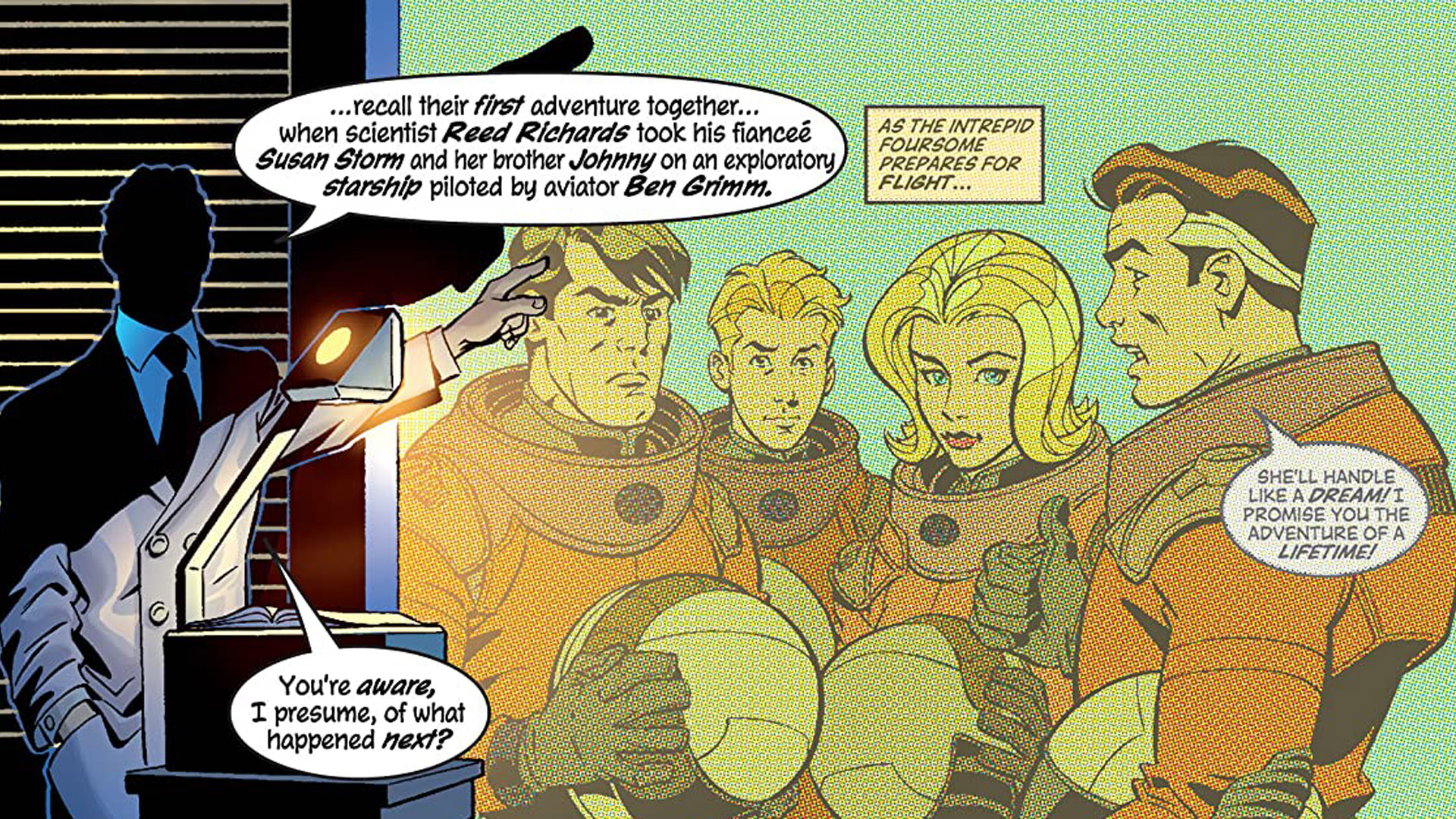
Tomcat Brevoort: You were out but on that point was a non-compete clause or something that got invoked and we had to stall for three months. That's why there's a three-issue run redress before ours that Adam Warren and Kieron Grant did.
Mark Waid: What happened [with me writing the book] was that Tom called and had already secured Microphone Wieringo [equally an artist], which made the decision easier, but I stock-still had to recall about it for a Night, because I didn't undergo a hot take on the Fantastic Four like I did for a dole out of early characters. I went sour and I thought about it, and what I convergent along was that everybody loves Sue, everybody loves Johnny, everybody loves Ben - cipher loves Walter Reed. Reed is nobody's favorite fictitious character.
So my oppugn was could I make Reed your preferent character? Could I exercise down on that. My breathing in was Buckaroo Banzai, but a little older and more seasoned. I titled up Tom and told him I had my take. A little Doc Savage. That's how I see the Fantastic Foursome.
The 'secret arm' on the squad Brevoort assembled, inker Karl Kesel in addition to his impressive resume as an creative person had compiled lengthy runs writing characters like Dose and Madcap.
Mark Waid: Tom, can you tattle about the why of Karl Kesel a little?
Tom Brevoort: Partially in my headland, Ringo and Karl were a package spate because I had worked with them on past projects the like Spider-Boy, and I always thought Karl looked good [inking] finished Ringo. Only Karl was as wel a immense Fantastic Four fan and had a good working noesis.
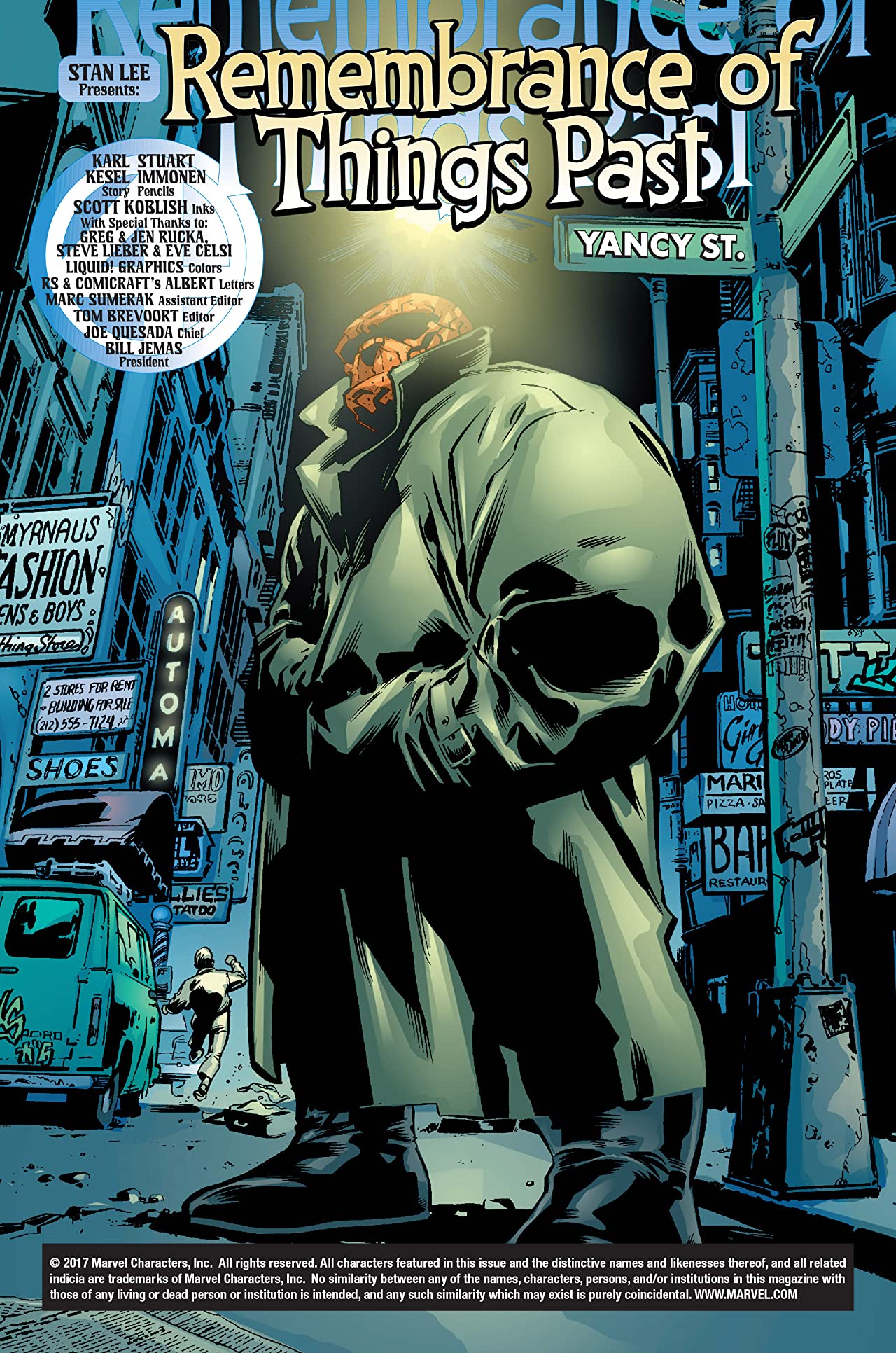
I remember the stories of back when he was working on Suicide Squad with Gospel According to John Ostrander and Saint Luke McDonnell where he would just same John all his thoughts along all the characters. I thought somebody with that level of ebullience likewise atomic number 3 that crispy sheen would be a good part of the team.
I was also a fan of Karl as a writer. Helium wrote two issues that were supposed to atomic number 4 redress in front this, but ended up being before the Robert Adam Warren issues. One of those was the historically serious moment where it was revealed that the Thing was Jewish. It had quasi been established in the background but ne'er put up front and we were totally unprepared for all the attention that issue got. It was supposed to just be a fulfil-in and we thought nothing of it.
Mark Waid: Yea, Karl is great to have in your corner, because no matter what book he's on, atomic number 2 thinks about the characters a lot, but he loves the Fantastic Four. He was a eager backstop. I can't recall specifics, but there were a a couple of times He would mother a script then address me to say, "I'm non sure this is how they would do this…" [Tom laughs] He was not haywire. He was never wrong.
Tom Brevoort: Karl was invested. He was part of the team. Frequently the inker gets relegated to beingness a official. Karl was invested in the characters and the book even beyond Ringo and Mark and me. He brought that attention to detail and that love to what he was doing. He was a huge asset.
The Grand Four launch area
Waid and Wieringo officially taken insure of Fantastic Four with effect #60, which, in an attempt to spread awareness about the other notional team, was released with a 9-penny price trail as opposed to the standard $2.25. The first off issue concluded on a memorable admission from Vibrating reed I. A. Richards while other early arcs introduced spick-and-span threats and added astuteness to the existing characters.
Newsarama: Mark, talk to me well-nig the precocious issues of the lead. What were you trying to accomplish? Non in terms of your run, but with the first five issues, or even just the first issue.

Stain Waid: The first issue, on a technical dismantle is credibly the best thing I've e'er through with. We went through 19 different drafts.
This is not a knock along anybody who came before, but when I come with to a book, I like to approach information technology equivalent it's been dead for 20 years and information technology's a brand newly concept we need to usher in to people. I'm a big believer that you should be able to walk by from a first issue and get laid the buy-in, have sex the premise, know the characters, and care. And you should want to come in back, which is why we didn't end the first issue on a cliffhanger. I liked IT organism a thing per se that could stand along its own. I want you to come book binding because you want to, non because you just feel like it was one fifth of a story. It was acquiring the pieces in situ, acquiring the concepts in place, qualification sure we knew what these characters were some and what they wanted.
Gobbler gave me the magnificent gift of Reed's voice communication at the end of that book…
Tom Brevoort: You ever give me too much credit for that! I might have aforementioned something in whatsoever conversation about "Reed instrument feels guilty," but you went "Aha!" The scene, the import - every last of that is yours.
Mark Waid: Thank you.
Tom Brevoort: That's you and that's Ringo. I remember you organism particularly happy with the two panels on the minute to last page that's just a push-in on Reed's head, Val looking up at him and then the next panel is tighter on him as he's similar "Someday…" operating theater something like that.
Mark Waid: Something like that.
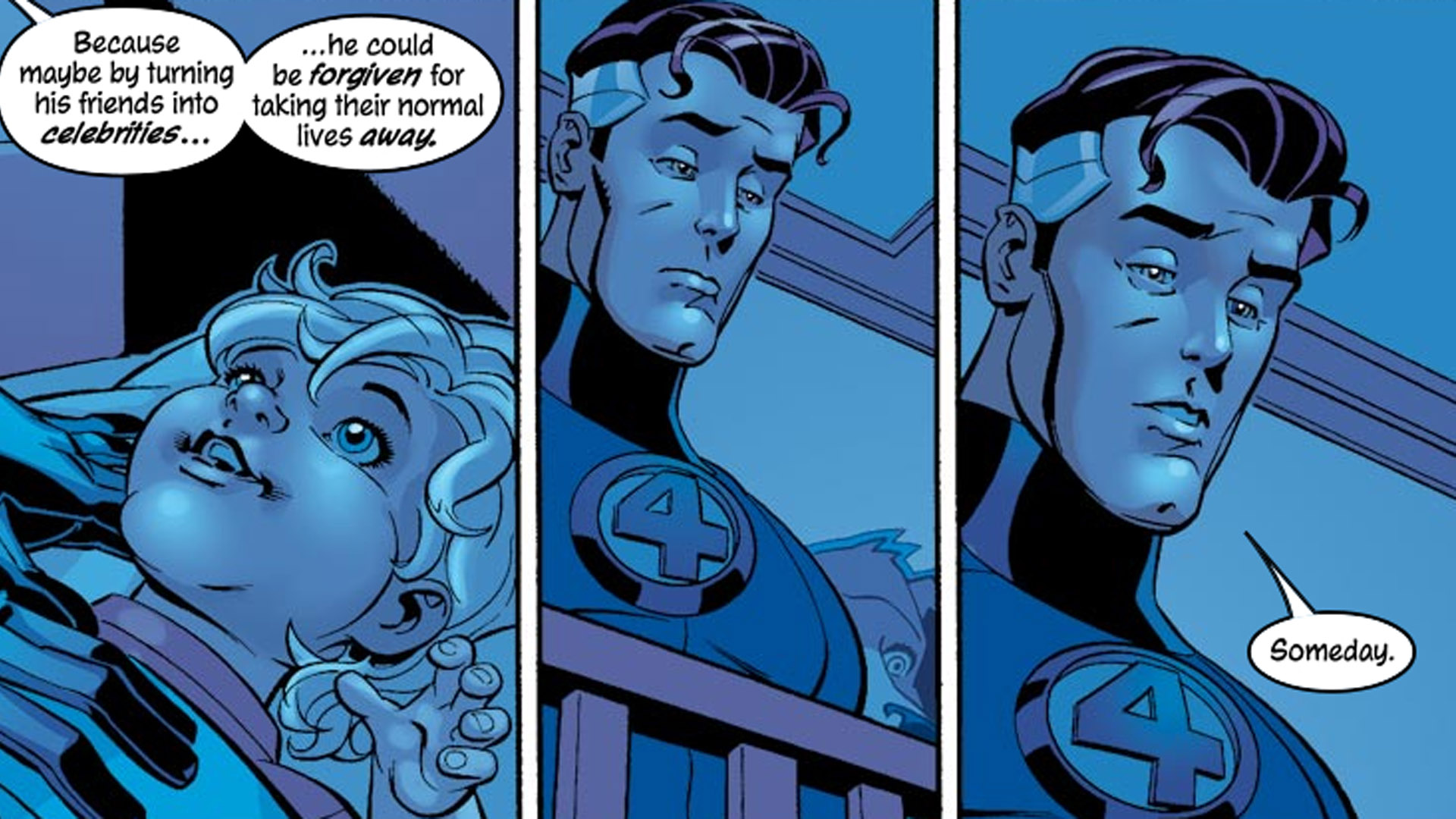
Tom Brevoort: The silent dialog box, the rhythm there - that's the thing that works.
Mark Waid: The former thing you'rhenium doing in a first issue suchlike that if you're nerve-wracking to relaunch, happening top of all the other things I said I welcome to provide, I also want to give you a perspective happening these people that you've ne'er experienced before, that nobody has e'er given you. That's the key to everything. Without the Reed instrument speech, I think it's a fine first issue, but the Reed speech is what makes it really click.
Tom turkey Brevoort: Information technology's the thing that has always been there but that you're showing people for the first time.
Mark Waid: Right.
Tom Brevoort: It makes it feel fres. That was one of the things we struggled with much, and why we broke a million different versions of our archetypal issue, because we kept falling into traps and going John L. H. Down blind alleys. I kept very much of those drafts and when I would be stuck with other writer I would shake off one at them. [Laughs]
Dwayne McDuffie wrote at to the lowest degree one special that was based hit uncomparable of the ideas we had. It's not the aforesaid story, because Dwayne did his own thing with it, simply information technology came from one of the nuggets of conversation.
The first issue needed to completely introduce everything and everybody. It needs to straight off throw the dust of the grey-headed, to make it seem new and fresh and fun and engaging. It has to attain you love the characters in 22 pages, all of them. Because that first issue simply cost 9 cents, archaeozoic on we definite we wanted IT to be self-controlled so you compensate your dime and get a penny back and a full meal. That was the real take exception of the whole thing.

Fantastic Four: Unthinkable
Fantastic Little Jo #67 served as a standalone prologue issue to the ' Unthinkable ' four-part storey that brought FF archenemy Doctor Doom back with a revived focusing on the orphic elements of the villain.
Newsarama: You bring in Doctor Doom with only the third arc, 'Out of the question.' What was the consideration in that location? Was there any concern you went to Doom excessively quickly?
Mark Waid: I think we did that because we knew subject #500 was around the corner.
Tom Brevoort: It was exactly that. We knew at the outset that #500 was forthcoming and we were going away to get along Doom for that. We had our flag in the sand. Then again, Doctor Doomsday showed up in issue #5 [of the original serial publication]. It took us seven or eight issues to get to Doom, so by a certain metric we were very relaxed and reserved.
Mark Waid: We were also very deliberately trying not to do, 'Buckeye State look, IT's Diablo' over again.
What I commend specifically just about the Doom arc is that Tom made a great call that if we were treating this book like something you hadn't seen before, we had to properly reintroduce Doom. So I had to turn back and write the lead-in account, which ended up being one of the creepiest things I've ever gotten to do.
Turkey cock Brevoort: Do you know the real story wherefore you did that?
Mark Waid: No.
Tom Brevoort: I could bank we've had this conversation before, but I give notice read wherefore you don't remember it. At the time you wrote part cardinal, which was originally role unity, our esteemed president of the era [Placard Jemas] made the decision in that location should Be no more flashbacks in comics.
Mark Waid: That's right!
Tom Brevoort: So originally in that issue you had Doom showing up and you got a page-and-a-incomplete of who he is. I got the script back and I was kind-hearted of stuck because I knew I was departure to get killed if I ran a page and a half of flashbacks, just you pauperization to have it away all of this overindulge, and if I told Mark that Beak Jemas didn't deficiency flashbacks, he was going to recede his brain.
Mark Waid: Yeah, I would have lost my mind. [Both laugh]
Tom Brevoort: So instead we hit on the idea of doing the Doom principal-in issue, and the Doom lead issue is not bad. So regardless of how we got there, IT worked out really really well.
Mark Waid: We had to skate or so Bill a few times.
Tom Brevoort: Really jumping slay of that 9-cent issue.
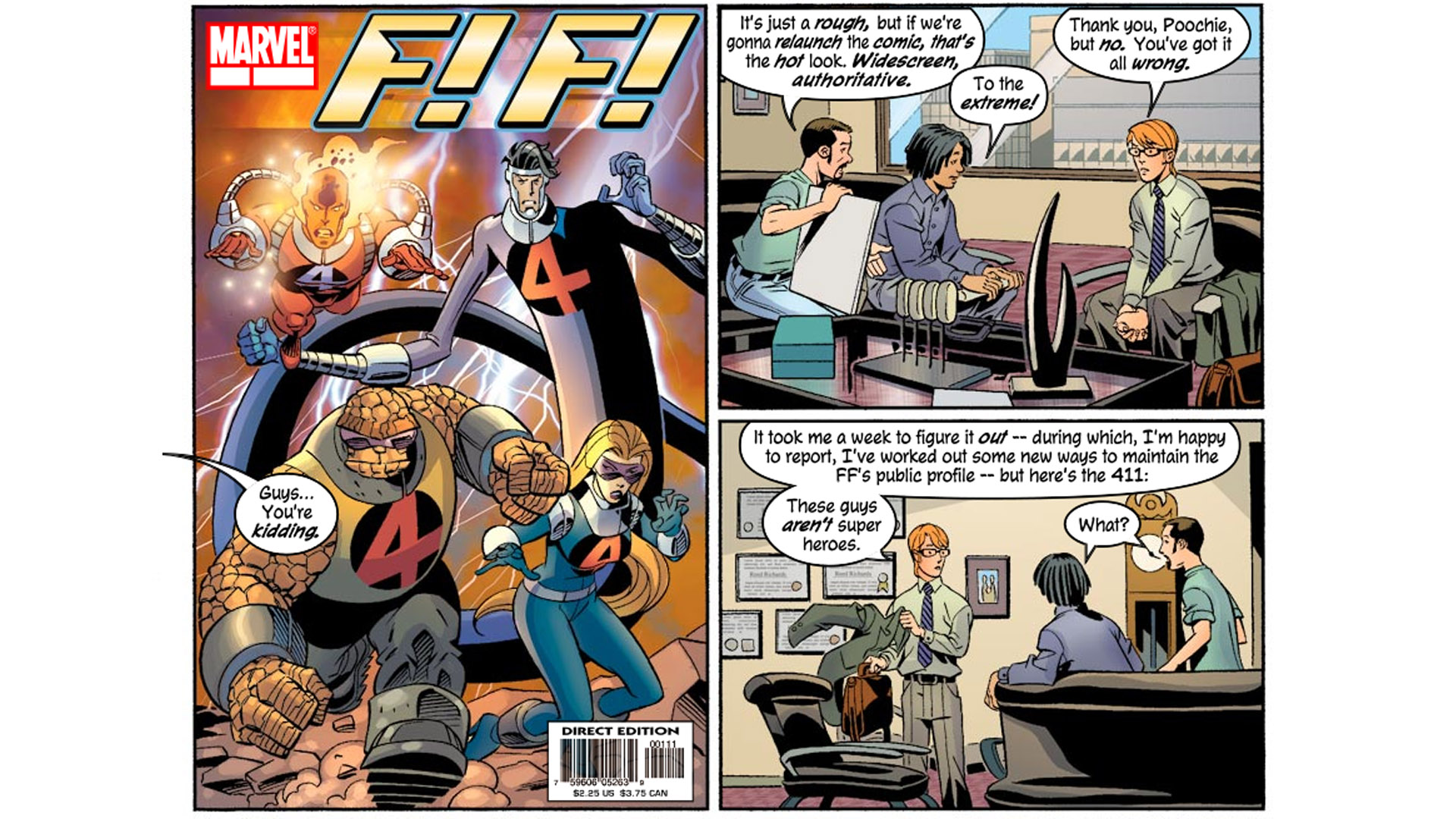
Mark Waid: He insisted on having a character in there that we could merchandize.
Tom Brevoort: I understand it, I legitimately act, in that we sold more copies of that 9-cent issuing than anything. We gone money on every copy we printed. Information technology started with a big fiscal maw, and atomic number 2 thought all the subsequent issues would deal, and they did, but not relevant that he had precious.
Wanting a character who we could merchandize was him nerve-racking to hedge bets. If we had that atomic number 2 could sell plush toys or any and make back some of that shortage. Only it was bananas for a couple of days, because He was angry most the critter, and he retroactively forgot that helium'd seen designs and was angry about it, and we had to change it. In the conclusion he reasonable got frustrated sufficient that He threw his men up and walked away, which was the best possible outcome, because we didn't make to interchange anything or make any allowances, though we were all instantly marked hands. Apart from that, the comic book turned out well, and that's what everybody cares about.
Newsarama: Where did the estimate to have Doom focus on the sorcery position of his character in 'Unthinkable' come from?
Patsy Waid: Information technology came, again, from nerve-wracking desperately to show you something you'd never seen before. We had never seen Doom come with at them with a magic wand.
Tom Brevoort: Doom, I think, was the first established villain that we went back to. Everything we did before that was all new. Doom is the first established Super Quaternary figure that we get back to, and even in doing so, our impulse was non to reinvent him, because atomic number 2 was built as a great theatrical role, merely to point him in a new light, to make him strong and new and different from any Sentence you'd seen before. We didn't wishing to tell apart the same Doctor Doom story you had seen a million multiplication. The literal take, the specifics, were all [Mark].
We all hit connected the same cover image with Val and the radiance in the dark eyes, and the blocks [spelling 'Doom'] - another cover I got in large-scale trouble for! [Both laugh]
That was at a time that Bill was pushing for a very limited focus for covers, he wanted them to make up single characters and particularly female characters. I think he had one or cardinal other rules. So we did this cover and afterwards he complained about information technology, and I same, "It meets all your conditions." [Both laugh] He was and so angry about that. [Denounce laughs] But it's a acceptable cover, so I don't bear in mind having done that.
Newsarama: Mark, did you feel like there was more fuel consumption rate in the sorcery angle for Doom or did you get all you wanted from IT?
Mark Waid: I think up I did. I didn't really envision this As a permanent status quo change for the character, it was just something that hadn't been done before. I'm also saucy enough to know if a character reference has been grooved since before I was born, you're never exit to impact any kind of permanent status quo shift with them, of all time. [Tom laughs]
You toilet try, but somebody will come and drop a pianoforte on it. There will always be a Baxter Construction.
Only a twelve issues into what was rapidly becoming unmatched of the more well-received Fantastic Four eras in any time, Waid, Brevoort, and their colleagues visaged unexpected opposition from within the House of Ideas itself...

Newsarama: Was there a reason the six-part arc followers 'Unthinkable,' ' Authoritative Action ,' was raddled by Howard Porter instead of Ringo?
Mark Waid: Do you in truth not know the story behind this? Turkey cock, take information technology…
Uncle Tom Brevoort: Thither were a couple of things going on Hera. The first was that this was around the time Marvel played around with double merchant marine and shipping Thomas More than 12 books a year. The mainstream, meat Marvel hero titles, the ones non seen as lustrous to the powers that be, were leaned on to ship more and thus help with the bottom line on the books that took yearner to come impossible. At some point we definite we would transport three extra issues of Fantastic Four that year, and it would be this 'Official Action' arc that came after the Doom level, for leash months we would ship twice a month. And that would buy Ringo future back four months afterwards.
Well, as we were working on this, at some point Bill [Jemas] decided, "Screw this, I have a better idea of what to fare with the Fantastic Four." It was called 'Working Class Heroes'' and it had the FF beingness stripped of entirely their grants by the government, and they're kicked out of their skyscraper, and they've just got the apparel on their back, and all work unskilled 9-5 temporary jobs while being super heroes rather on the sidelong. He wanted us to at once do that.
Mark up Waid: Like a sho!
Tom Brevoort: No matter how very much we would argue "but that doesn't make sense," he just wanted the matter that atomic number 2 wished-for, and He was the lead guy thusly he got to piss that decision.
Tick Waid: We tried saying we would behave information technology for a write up and give it a reasonableness to beryllium.
Tom Brevoort: We had a altogether matter worked out, and it's good enough that I've had it in my back pocket for 20 years. No matter World Health Organization's writing FF, if we come perplexed, I go, "or we could get along this!" It still hasn't happened. But we had a methodology worked out where you could take all that stuff away and make them no longer beloved etcetera. Merely it was excessively complicated.
Bill really just wanted a FedEx from the government to show raised on page unrivalled locution 'you're discharged,' out of the house by page two, Sri Frederick Handley Page three you're in the new status quo. Bill got frustrated and aforementioned to enkindle Mark. I had to call Mark up and recount him he was off the Scripture. Ringo quit in solidarity.
So this new creative squad was going to start this 'Working Class Heroes' idea with what would have been Fantastic Four #509. That ended up instead being the Marvel Knights 4 Book that Roberto Sacasa and Steve McNiven did. They started working on this, merely it will surprise nobody that Steve is not the fastest artist in the world. This was the first thing Roberto was doing for Wonder, they recruited him from doing that play that was the pastiche of Archie. He did a very nice job with the story, but it took awhile to get going, so to bargain sentence we decided to single ship those FF issues instead of double shipping and get three Sir Thomas More months.
This is all going on, at that place are backstage battles where I'm saying I'm non going to edit those books, they'Ra telling Pine Tree State I am, and so, what short changed was that Poster was out. He was through with and Joe [Quesada, the then-editor-of import] decided to do 'Working Class Heroes' as the Marvel Knights book and told me to get my ducks in a row. I went back off to Mark and Ringo on an individual basi. Earlier you guys were going to go and do Horde [of Super-Heroes for DC]...?
Mark Waid: We were going to perform Legion, yeah.
Tom Brevoort: Dan DiDio was new in his position at the top of DC and was very unrestrained about getting the team that had been fired from Fantastic Quaternity, fired from Marvel, to practise Legion. I remember a meeting with ME, [Mark], and I think Joe at the Chicago convention…
Mark Waid: Yeah, I think out Joe was there.
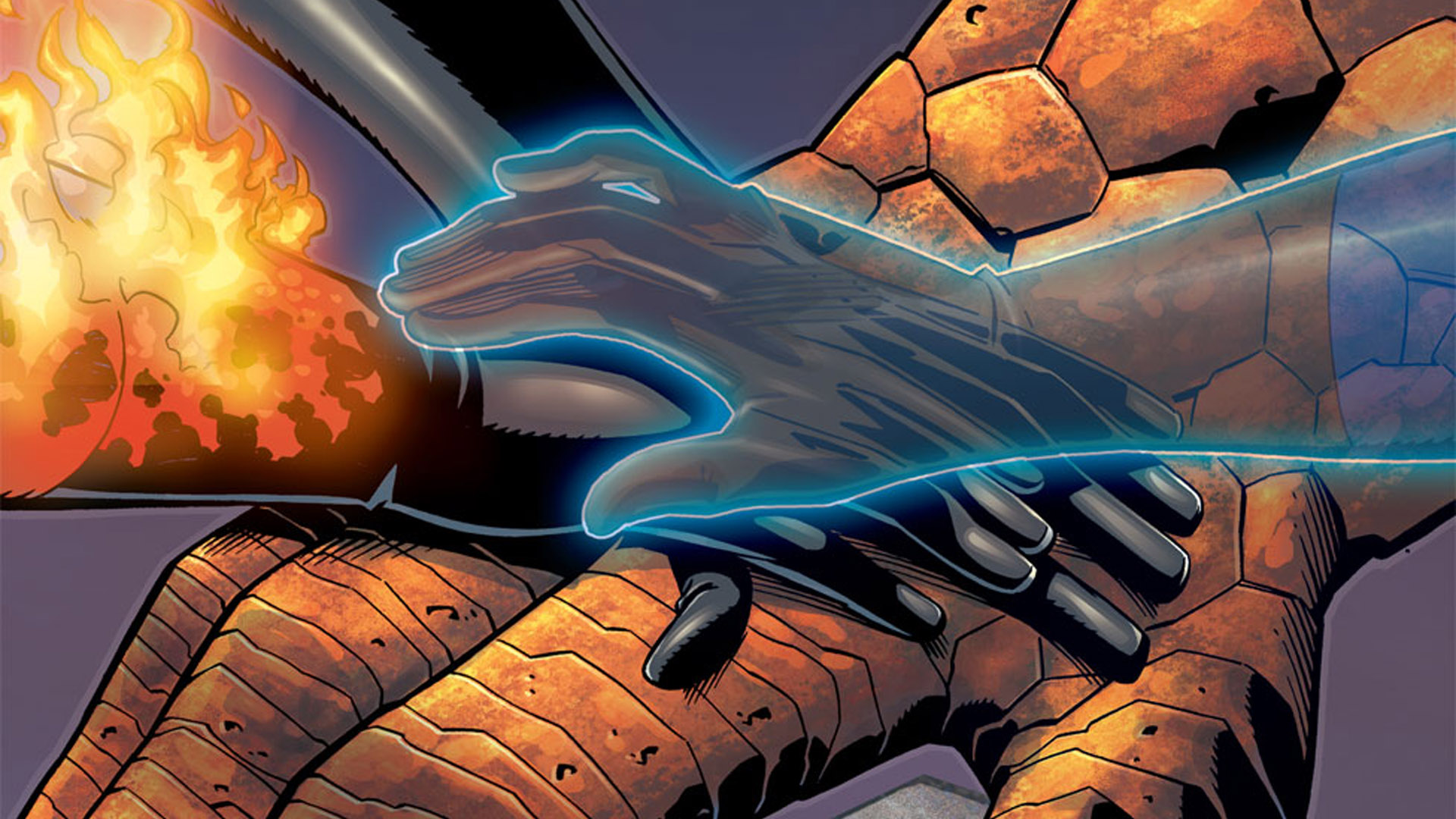
Tom Brevoort: I well-tried to babble out Mark into coming back and doing gorge over again. He was concerned but agreed to at least end the [FF] draw. 'Authoritative Action' was not originally the finish of that run, and it was not going to end originally with The Affair getting killed, that would have been a funny way to end the run. [Mark laughs] It wasn't supposed to exist that. I originally confident Mark to do deuce issues because he had a begin go steady on Legion. We would do a big conclusion and at least end the run nicely, and Cross off was onboard for that.
I known as up Ringo and Ringo was aboard for that likewise, helium didn't give birth to start connected Legion quite yet. Then I guess a daytime or 2 later they dispatched over his exclusive agreement for Legion, and he called Dan and said "Looks good, I just need to get through two more issues of FF and then I'll be ready to startle." "What do you mean two more issues of FF?" "Saint Mark and I are going to come cardinal more issues to finish the run." Dan exploded, his head blew up. "The whole point of this is I want the guys who were laid-off from Marvel, not the guys who went back and fattening the extend!"
He basically told Ringo, 'If you go back and do this, [expletive] you, we'Ra non expiration to give you an alone.' Ringo called me up, relayed all of this, and aforementioned helium was still leaving to exercise the two issues of FF because he told ME that He would. I told Joe about all this and by the end of the day, Ringo got the paperwork for his Marvel exclusive contract that matched each the price DC had given him.
At that point we patterned wherefore just do two issues, everybody is back, allow's do more! [Tom laughs] We had so more than material from the 'Authoritative Action' spark that there was literally nobelium disruption of service. There was very much of storm if you were online operating theatre following Wizard OR whatnot, but sporty reading the comic you would have no idea that anything had been going on.
Mark Waid: But if you were online - information technology's a joke, but IT's absolutely true that we stone-broke the Internet. Newsarama crashed. The one cool takeout from being fired and it being so public and despicable is that information technology was like Tom Sawyer being at his own funeral. All we got altogether weekend was 'This was the second-best comic record ever, how could they do this,' and that was good.
Tom Brevoort: It showed that what we had set out to do at the beginning of the run, we had done. Here's a huge segment of people who cared about this era of Fantastic Four who a year prior would have been indifferent. So on that level it was a nice affair in the middle of a lot of not so nice stuff.
Tiptop Four finds God
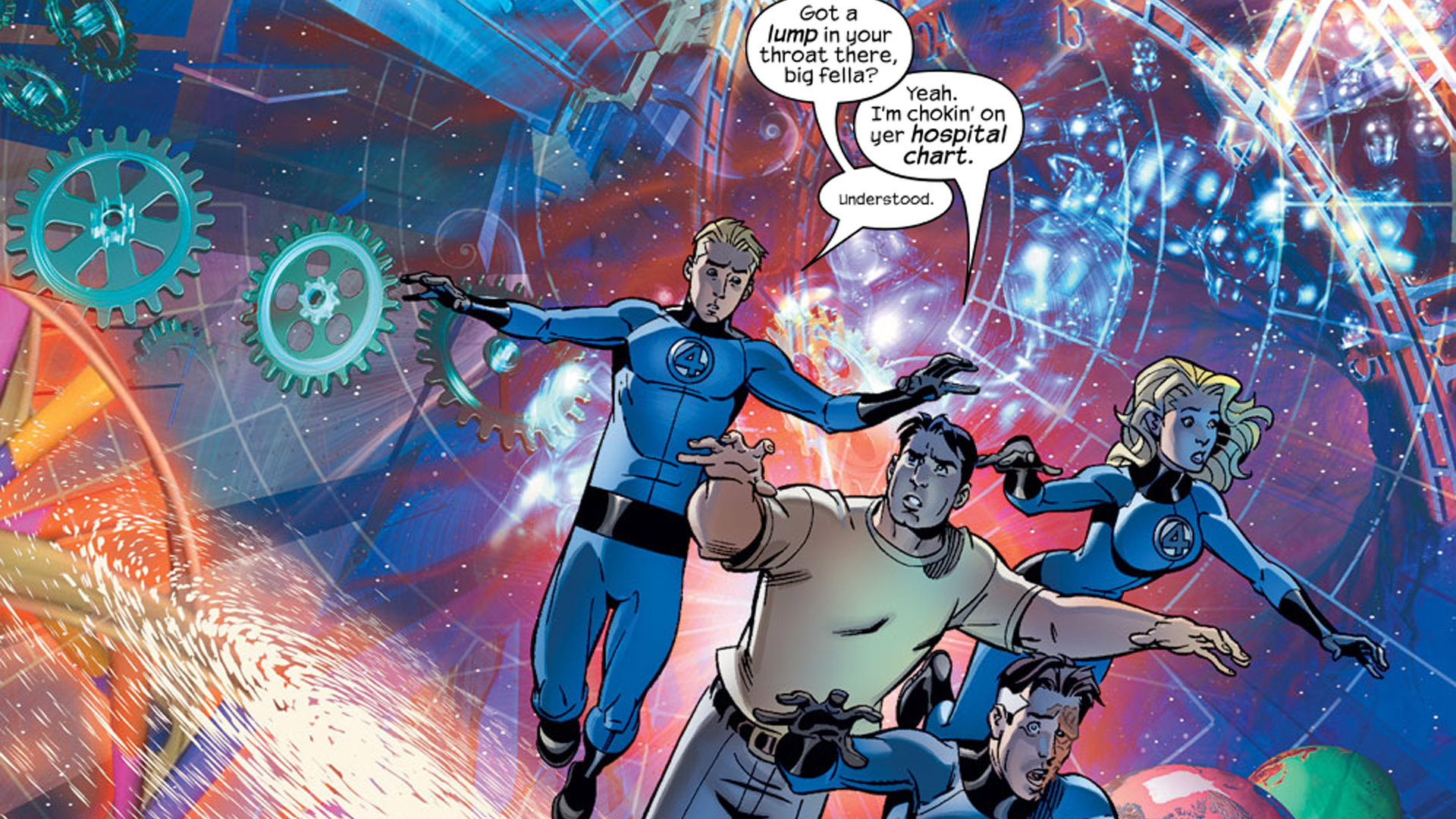
Newly reinstated and reinvigorated, Waid and Wieringo faced the obstacle of bringing The Thing back from a seeming demise at the end of 'Authoritative Action.' Their solution in the ' Afterlife ' trilogy of issues took the FF to a domain where even they had never ventured...
Newsarama: I need to ask about the coming into court of Jack-tar Kirby as 'The Creator' in the 'Future' arc. Did that just make sentiency or was thither to a greater extent to it?
Scrape Waid: That was [writer] Tom Peyer.
Tom Brevoort: It was Tom Peyer!
Mark Waid: I always talk stories over with Tom Peyer. I was fishing for that and he came up with the perfect thought. Of course the 'God' of the Marvel Creation is Jack Kirby, of course IT is.
Newsarama: Was on that point any resistance to the musical theme on any fronts?
Tom Brevoort: The part that was hard was convincing me to do the story earlier. Denounce pitched me the idea of the FF going to the afterlife, going to Shangri-la, to delivery Ben and I didn't like IT on principle. I didn't like it on principle because I don't like it anytime we treat death Eastern Samoa cavalier. I don't care it when you can take up a bus to get the stone-dead hombre dorsum.
Mark Waid: You put the take exception in front of me that it couldn't atomic number 4 duplicated.
Tom Brevoort: I didn't want to be able to bring around anybody, and you found the right bit of continuity to make it form, the 'Doctor Doom trying to save his mom' machine, and that more than anything else was the matter that made Maine buy out it and say let's go. But I definitely dragged my feet on this story, but I had gone through a lot to get these guys in reply and I couldn't turn down the first story they were pitching me! [Gospel According to Mark laughs]
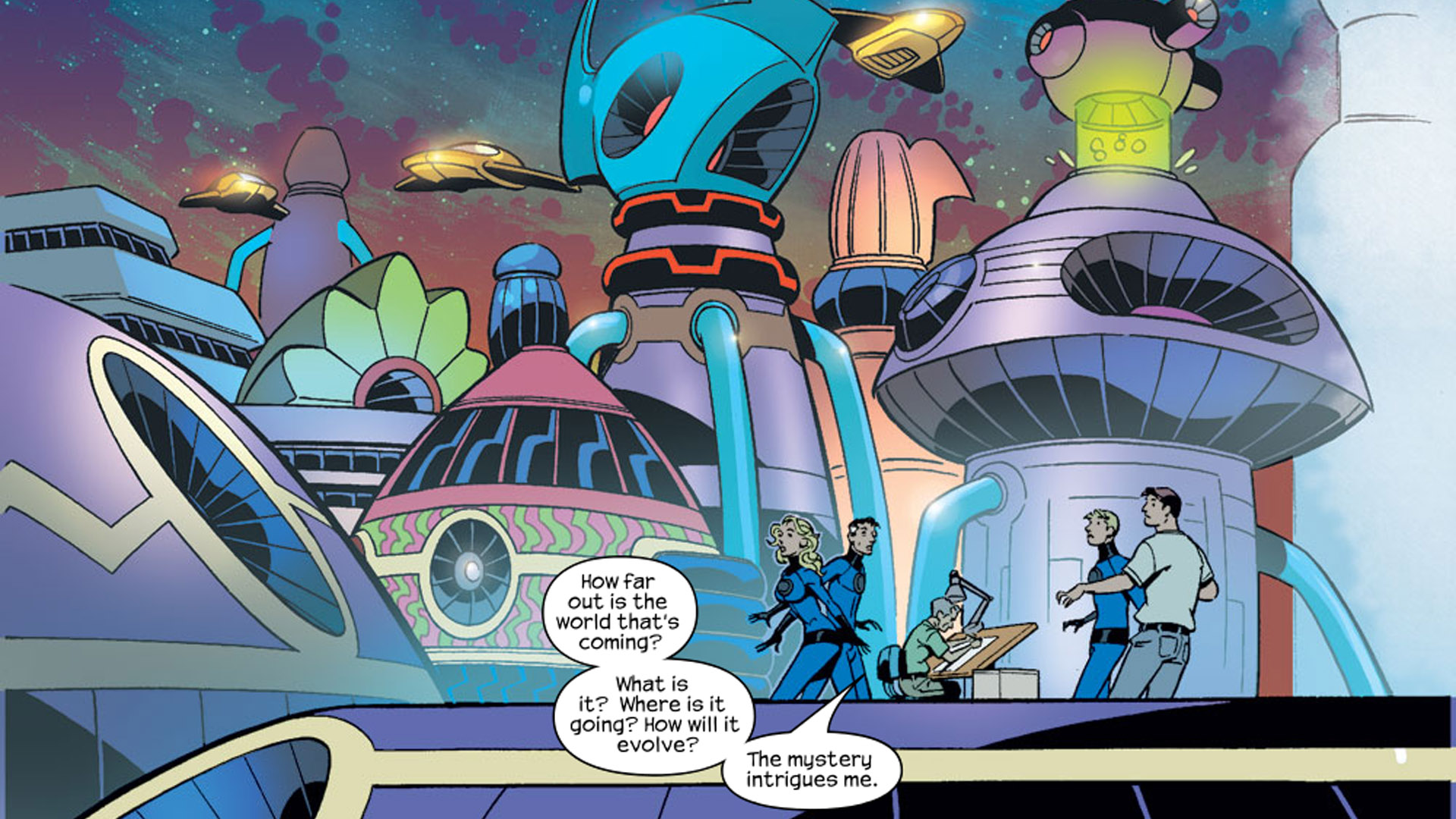
In terms of the [Kirby] cameo, I don't think we particularly told anybody. I think we antitrust did IT. When we did IT, I father't think anybody particularly cared one fashio or other. It was a comic, people commented on it, it got a bunch of buzz, and nobody ever came to Maine saying 'What have you done?!' because we were detailed about how we did it and tried to be deferent all around. I am told, lamentably, that the Kirby home was not happy about it, which I regret. I almost certainly wouldn't have done it--
Mark Waid: I wouldn't have through with it. Information technology ne'er occurred to us that they'd be unhappy.
Tom Brevoort: That's the 1 sort of dark overcloud it. They would have instead we didn't do that. It absolutely seemed like a masterstroke though. I remember how aflutter [German mark] was when he called Pine Tree State to read he had the ending [to 'Hereafter']. It also had to prosper to three issues because you needed the blank to do the business and the punchline. I matt-up like the depiction was keen and everybody involved got it and was able to make it work. It's by all odds single of those moments that everybody remembers, flatbottomed if they don't know why.
I suffice a Marvel Version Surround every week with our editors and sometime inside the last six months we did this book, and at least half the people in that circle, because all the editors are younger now, didn't beget the ending, they didn't get the quotation.
Stain Waid: Amazing.
Tom Brevoort: To them it was just, 'All right, Supreme Being is a cartoonist.' Information technology mayhap doesn't have the equal charge of resonance, but it still works. That, I imagine, more than anything is wherefore the issue works. Ringo used all the reference in the humanity. That's Kirby's studio apartment, that's his patio, it was very on target area.

Their goals with Fantastic Four
Waid and Wieringo's far-famed stint as the storytellers responsible for Fantastic Four concluded with 2005's issue #524 of the series, which had resumed its original numbering. Brevoort would remain along as editor in chief for years shadowing and continue to steer the ship of Marvel's storied first comprehensive heroes of the Silver Age.
Newsarama: Mark, what do you feel like your legacy is happening Fantastic Four, and what act up you want IT to be?
Mark Waid: It's strong for me to judge what my bequest is. My educated surmise is that multitude equal Reed more. Candidly, that's probably what I would require it to be. Reed is nary longer stringently the view of 60-year-old men World Health Organization like the Fantastic Four. He's still not anybody's favorite character, everybody loves Ben. Everybody negotiation well-nig Wolverine, Spider-Man, etc., but I've never in my life met anybody who doesn't like Ben Grimm.
Tom Brevoort: Yep.
Mark Waid: All these characters have their fans, just I just wanted to give Reed his due.
Tom Brevoort: Honestly, if you review at it, that worked out. I would debate that for the last 20 years, Reed has been the central character of the book. Before that, information technology tended to cost Ben or [somebody else]. Each the runs that came after have been about Reed. [J. Michael Straczynski] - Reed-centrical. Deutsche Mark Millar and Bryan Hitch, very Reed instrument-centric. The Jonathan Hickman run - very Vibrating reed-centric.
Mark Waid: Very Reed-centric.
Tom Brevoort: Almost everything since Mark's fly the coop has put Reed advance and center, soh it definitely had a lasting impact along how this generation perceives the Fantastic Four. It's to the point now that I need to mess The Thing and remind hoi polloi why they love him in the first-class honours degree place.
Newsarama: Uncle Tom, how did Mark and Ringo's run shape the way you would edit the Bible even after they left?
Tom Brevoort: Connected a sure as shooting level it destroyed me for everybody else. [Mark laughs]
Besides I learned the lesson not to fire people in the middle of their run, I haven't done that since then! [Punctuate laughs again]
I father't know that it had a lasting wallop beyond all time we set out a new break awa [with a new creative team] it's with similar purpose, to not do the very thing we've already been doing for 60 years. How is this different? How can we take these characters and their relationships and clobber we take for granted in a new light? Certainly there are bits that keep coming up because they were massive and we sort of defined them in this run.
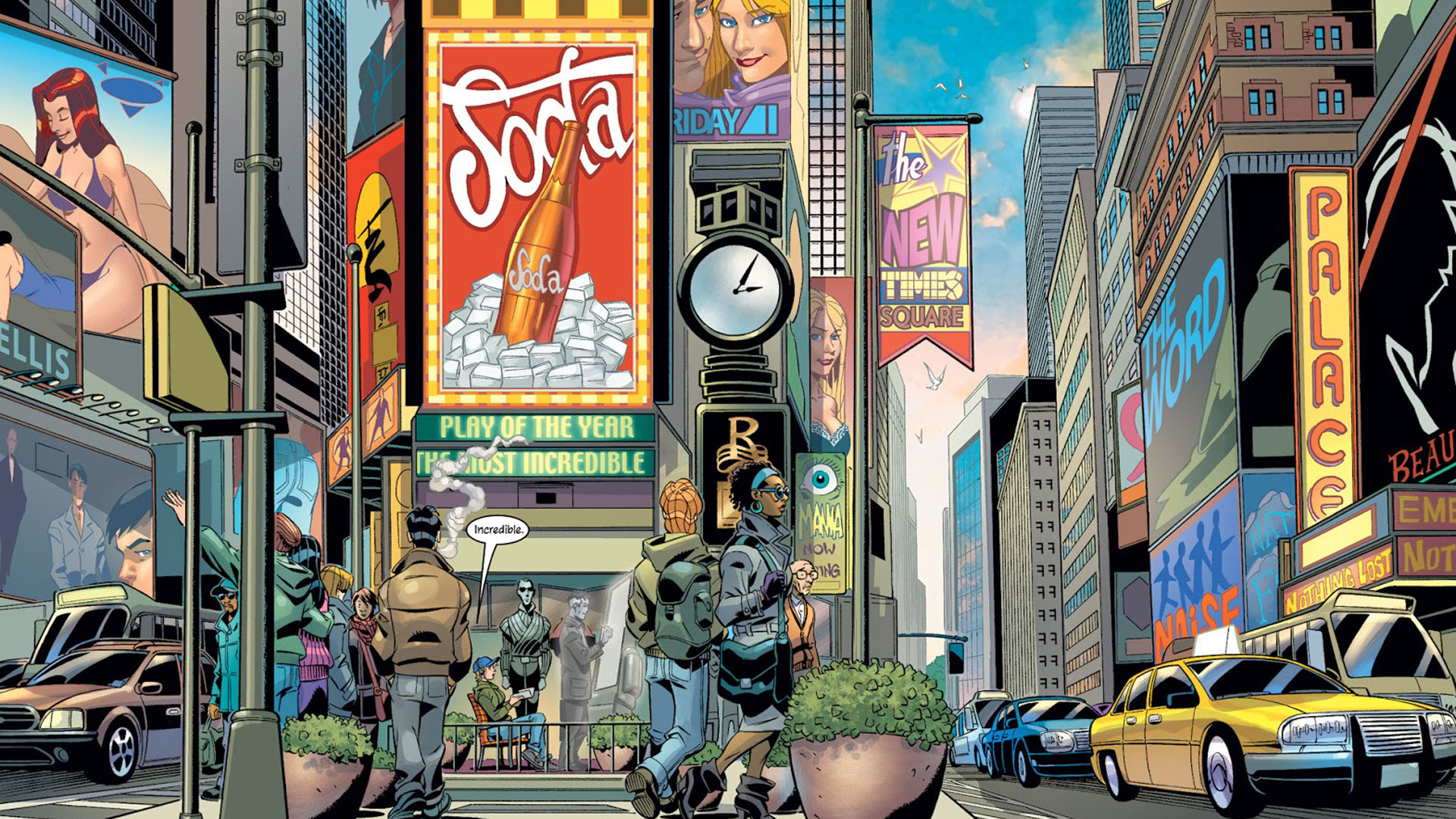
Well-nig everybody who has cooked FF since this run has heard me talk about pass over matching the characters. You want to do a good deal of Ben and Sue scenes, you wishing to execute a batch of Reed and Johnny scenes. You want to put characters with each other that you're not accustomed seeing them with. Everybody bequeath do a Reed and Ben scene, the Reed instrument and Sue scenes are obvious, the Sue and Rebel scene is obvious. We did stuff like Walter Reed and Sue being in crowded Greater New York and her qualification him nonvisual so he could do calculations while organism stirred up by all the things around him.
Mark Waid: That was in Times Square. That's his equal of an isolation tank. He needs that.
Tom Brevoort: Them having a fun day out, because they could be a fun couple, they'atomic number 75 non your parents. Things equal that always come across in the back of my brain Eastern Samoa I agitate new mass toward doing a big arc or story of Fantastic Little Jo. Really though it's kind of all been downhill since that run. [Some laugh]
IT's not like there haven't been good things since, but that's the one for me. There's an omnibus straight off, I like that there's an omnibus.
German mark Waid: I love that there's an omnibus. IT makes me so happy. [Tom laughs]
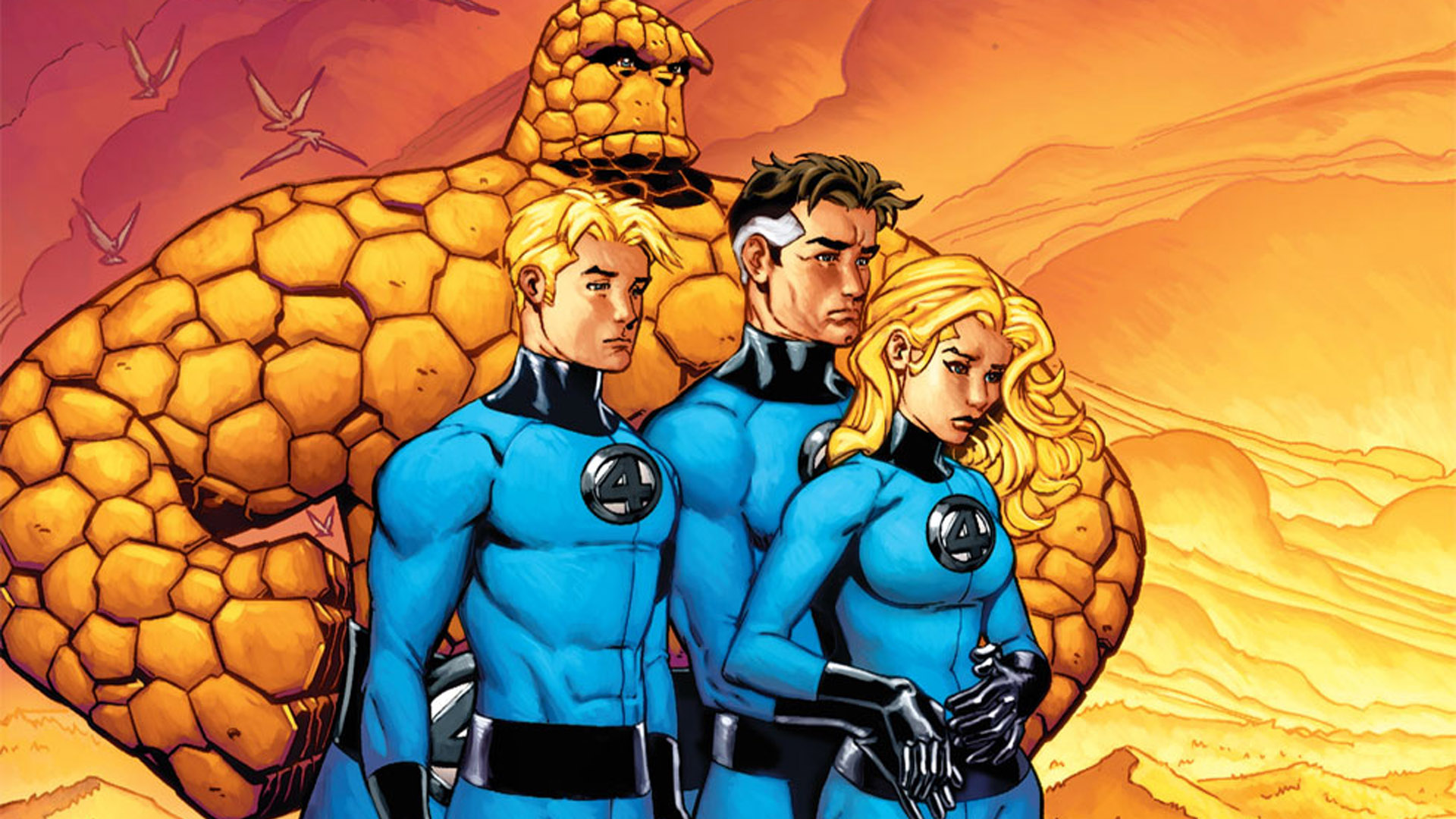
Remembering Mike Wieringo
Microphone Wieringo passed away at the tragically young senesce of 44 in 2007, only a couple years remote from his work with Waid along Fantastic Four. Remembered non only for his immense artistic gift but his universally beloved status within the industry, Ringo's determine continues to be matt-up to this Day.
Newsarama: I privation the inalterable word to be about Mike Wieringo. What do you think of about employed with him on this and what did he bring back the book that was special and unequaled?
Mark Waid: Have me go first. Humanity was what he brought to the book. The characters are acting, they'Ra real, they're human. One of the things I loved nearly Ringo is that nonentity is in the panel unless they're doing something. He doesn't do typical panels of one character and then there are just people in the background; everybody is doing something, they had body language, they had facial language. He always felt like helium was too cartoony to coif the Fantastic Four. True at the end he felt like-minded it was non quite the style that people expected, simply they didn't care, thither was such life to it. It can be such a humorous Christian Bible, it can be such a beginning of comedy, and Ringo brought the funny story. Helium can serve anything. That's my answer.
Tom Brevoort: Everything that Nock said. The humanity goes to Ringo himself. Ringo was a super baseborn guy for a humankind who had the considerable talents and skills that he had. He was not in awe of his own abilities and was much more likely to be excited about what somebody else was doing. He was sol excited about people World Health Organization would come up to him and show their burgeoning samples. He was a really good mentor and big brother figure to a lot of up and coming artists and natural endowment. And a really beloved figure therein way also.
To me, IT all goes back to it story about him climax back on the book. The smart affair to Doctor of Osteopathy would have been to stick with the volumed exclusive contract that would take care of him, but he kept to his Good Book when He probably shouldn't have. I wouldn't throw blamed him for non orgasm back. That speaks to a certain element of character. He said he was going to do it and therefore he was going to do it, regardless of the consequences. Ultimately information technology shook taboo in the long run, merely he didn't know that when he was fashioning that choice and he did IT anyway. It goes on the far side what he did on the page.
And his work is beautiful. He composes beautifully. Atomic number 2 immediately shaved 15 years hit of every character reference in the book of account. For entirely that he disquieted about his graphics being too cartoony, and thither were people in the industry who said his art was also cartoony, it was an immediate footstep up for the FF that made them young and vital--we didn't need to tell you that, they just are, he just draws them that way, they're having fun. It's fun and it's delicious because he imbues it with such magic of characterization. He could sop up what [writer and editor program] Danny Fingeroth accustomed call 'the punchin' and the hittin'' as well, just it was the strength of everything else. And sure as shooting he had the comedy chops. That's the unavowed to what Mark down does as well, mix the drama with the bodily fluid, and that's a natural endowment that's comely more and Sir Thomas More rarefied in the world of superhero comics, unfortunately. I think it's one of the things that helped set that run divided.
Mark Waid: I think the bottom line with Microphone is that if you could have bought him for what he thought he was worth and sold him for what he was actually worth, you'd be a millionaire.
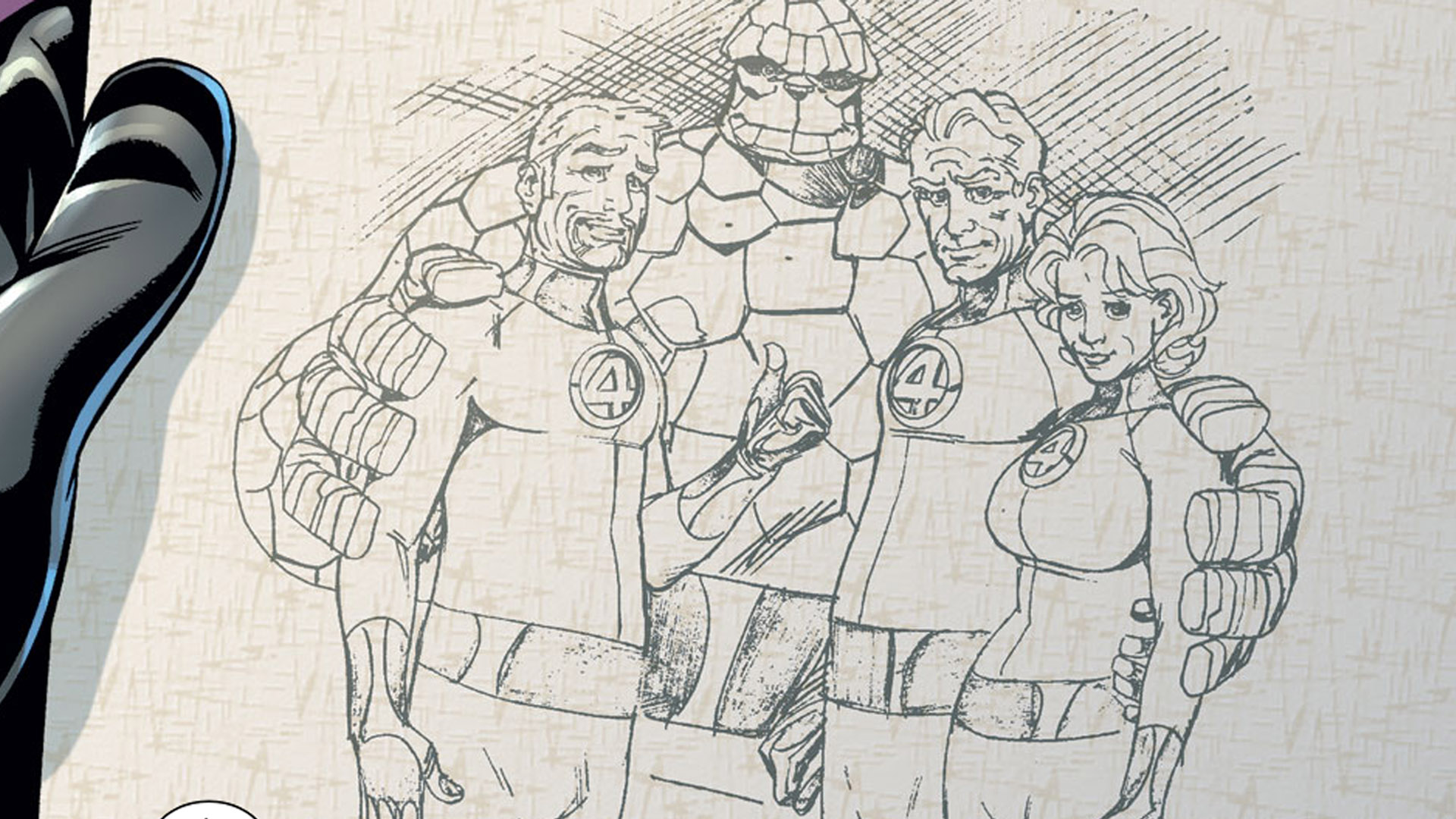
With the Fantastic Four back at the cutting edge of comic books both atomic number 3 a publish and digital material possession and impending feature article film, it's important to acknowledge the contributions of Waid, Brevoort, Wieringo and the eternal rest of the team that brought the FF to this point.
Waid and Wieringo's FF running game has a couple of spots on our recommended best Fantastic 4 stories of all clock.
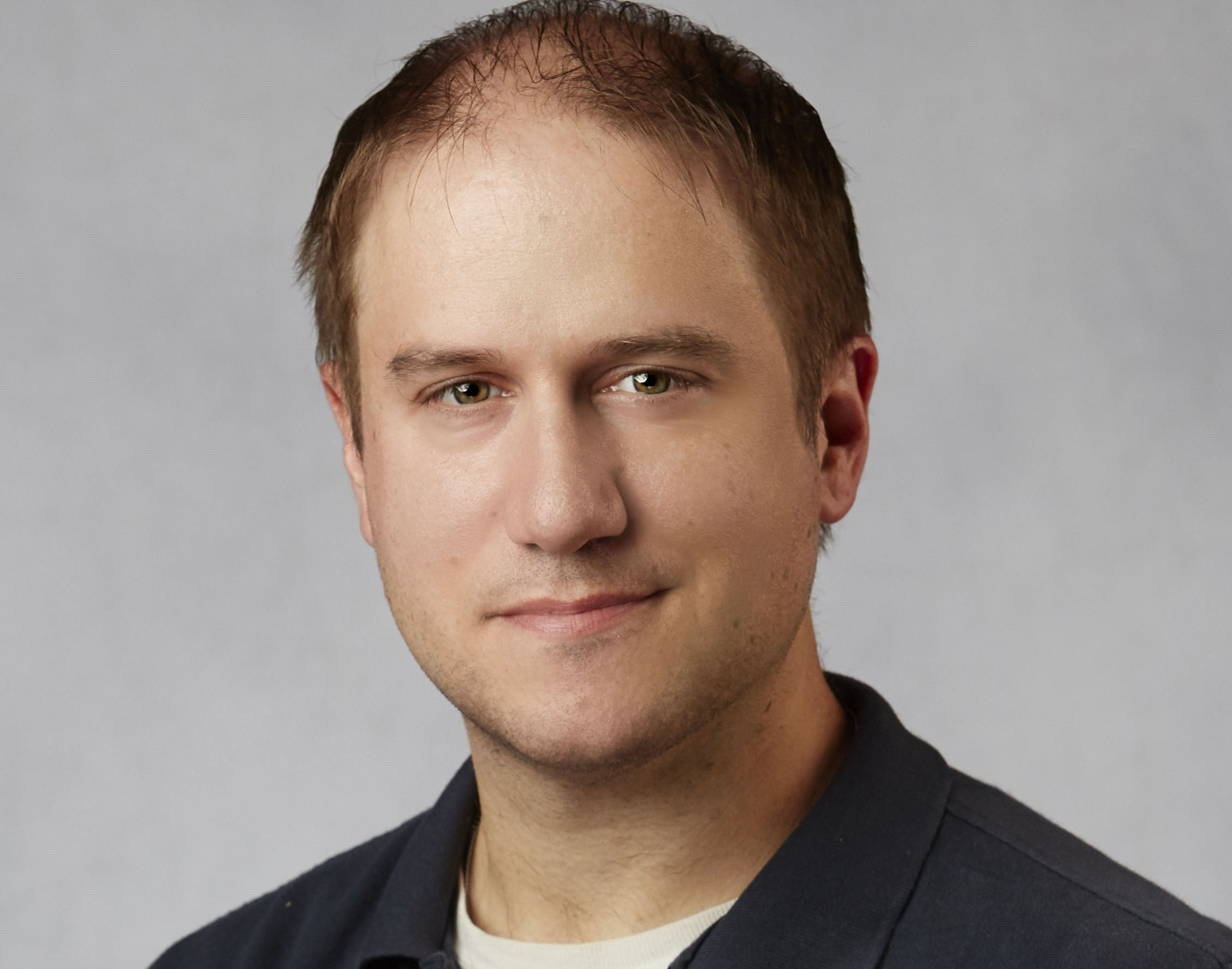
Ben Morse worked in the mirthful book of account industry for nearly 15 years, starting at Superstar Magazine in 2004 and later outlay a decade at Wonder Entertainment every bit part of the Digital Media squad. Since 2018 he has been a visiting lecturer at UNLV in Las Vegas at the Hank Greenspun Cultivate of News media and Media Studies. He currently co-hosts the Other Identity podcast and continues to write of comics any chance he gets.

Source: https://www.gamesradar.com/fantastic-four-mark-waid-mike-wieringo-tom-brevoort-ff/
Posted by: franciscompter.blogspot.com
0 Response to "Fantastic Four: The oral history of the iconic run by Mark Waid and Mike Wieringo - franciscompter"
Post a Comment